About Me

About Me

Gardener, Writer

A former English teacher and bookseller, I now work as a self-employed gardener (National Certificate in Horticulture) and write poetry, plays and essays. My writing credits can be viewed here. I have had two poetry books and two poetry pamphlets published by various publishers. I was a co-translator of Alain-Fournier:Poems (Carcanet). I commissioned and edited Four American Poets (The High Window Press) and was a co-editor at The High Window (2016-2018). My essays can be read at the Fortnightly Review. I enjoy cycling, fell-running, sea swimming, dog-walking, jazz, travel, reading, horticulture and garden design.

8.5.26

Percy Bysshe Shelley


A new essay published on 3rd May, 2026 by the Black Herald Press

https://www.blackheraldpress.com/post/public-vs-private-shelley-s-poems-of-love-and-redress-an-essay-by-anthony-costello

Sample paragraphs...

‘The Mask of Anarchy’ and ‘Ode to Liberty’ and ‘Adonais’ are signature poems examining political issues and social mores; 'The Mask of Anarchy’ and its trenchant call for justice and suffrage, ‘Ode to Liberty’ with its pan-historical litany of tyrants and emancipated peoples in a dialectical struggle, nineteen stanzas detailing the suppression of people, and past violations of human rights. Both poems honour the importance of the individual. Shelley describes the oppressed as ‘glorious people’ in ‘Ode to Liberty’ and as ‘Heroes’ in ‘The Mask of Anarchy’. Of Keats he writes in ‘Adonais’ that ‘The One remains, the many change and pass’. Shelley identifies with each person’s right to freedom, and self-identifies with those ‘who drew new figures’ on the ‘fragile glass’ [of the world] in ‘The Triumph of Life’. Individualism is a triumph of life. Shelley’s poetical works and prose are an attempt at making his own mark on the world; the lines that Shelley and Keats draw intersecting in poetry and life, the Romantic period notable for its series of criss-crossing figures in science, art, poetry and politics, and the indelible marks left behind.

*

Shelley’s perfunctory treatment of Harriet Westbrook, leaving her and their children, and eloping with his [soon-to-be] second wife, Mary Godwin [Shelley], indubitable evidence of his bad, perhaps evil, character. The ensuing tragic suicide of Harriet creating more antipathy toward him; a disdain strong enough to overlook Shelley’s life-long fight for human rights, a dislike, perhaps hatred, strong enough to supersede any empathy for his personal loss — ‘I wept, I thought it was a dream, I weep’ (‘Epipsychidion’) — not forgetting the subsequent refusal to offer him custody of his children, Ianthe and Charles, due to his social radicalism and professed atheism. However, the private poems of love transmit healing and conciliatory light and offer his detractors pause for thought; a chance to see another side to Shelley, the altruistic tone in his poetry, and a sensitivity which is the source of the socially-conscious public poems, and central to his personality as expressed at home. It’s impossible to detect a purposely cruel man in these poems. They are free of the masochism of struggle that dominate his public life, free of defensive strategies, and function as a form of redressal with regard to his reputation. They display an emotional honesty, perhaps naivety, that if explored more fully could have led to him writing about his childhood and creating his own songs of innocence and experience.

*

Perhaps the political poems are the result of Shelley’s childhood experience of abandonment and alienation, the political rebel and love-at-all-cost philosopher aspects of a persona Shelley inhabits for his revolutionary purpose, a public poet who protects the wounded boy traumatised by beatings at Syon House Academy and Eton; bullied for being different to the group, the majority, terrorised for being who he is: poet, original thinker, prose writer, reader, revolutionary, libertarian, republican, moral atheist, a unique individual.

*

The poems of love are a pool of lambent light in which the public face of the poet disappears. The private Shelley — often naive, needful, child-like — emerges in poems addressed to those he loves; poetry he locates in domestic settings and where loveliness is at one with the ordinary: ‘moss-grown trees’, ‘sunny grass’, a human voice, a bird singing, a love-thought expressed. Love in Shelley’s private mode of being is all-encompassing, a trance-like ecstasy. When he’s able to separate himself from the self-alienating aspects of ‘the public poet’, he becomes happy in his own happiness. Whereas Keats finds vicarious happiness in a nightingale’s song [of happiness], Shelley is happy in himself when he feels, and expresses, love in all its manifestations. In this state of relaxed bliss he can say: this is how I feel, this is who I am. What is most beautiful is love, particularly when love is aligned with ‘the individual life’, an exalted state of being true to oneself that Shelley wants each person to realise and experience.

14.10.24

Wife

What he calls ‘wild’ is my soul defiant. What he calls ‘untamed’ is my fight to be free…                                                                                                  

A visitor from England, talk of love, money, a new life, and a marriage arranged by men explain, in brief, the forces that brought me here; from sunlit days at Coulibri in Spanish Town to this dark place—Thornfield Hall. Or do I dream? Unsure who I am without my looking glass, I repeat my name: not Bertha, Antoinette! Antoinette! I trust no-one and nothing. Except hate. I can’t stand another night in this Hellish place. He told me I was tall, fine, majestic. He burned with a passion that stirred mine. In bed I wore the red dress he asked for. I was his ‘beauty’. Exotic. Day and night. Love was a snare, the wedding a blur, a trap.The ship bound for England, a cage. Now, I’m the unseen wife on the third floor—‘lunatic, pygmy, demon, thing, hag’ … curses that reach my ear pressed to the boards. What he calls ‘wild’ is my soul defiant. What he calls ‘untamed’ is my fight to be free. I am locked in this room, remembering the promise of a life he made. I break the chairs, bang on doors, stamp on the floor. I scream nightly, lest he forget the young girl he dreamed of and lusted for in Jamaica is thinking of revenge, escape. The governess has gone. I know this pains him. I care not for his loss. I cry for everything I have lost, family…home…who I was. A pain creased his face when I asked: was my dowry worth all this? The candle lights the way, a torch of liberty, when the tapestry is ablaze, the floor on fire, I will climb to the roof.


Anthony Costello 


 from the anthology No Net Ensnares Me (Calder Valley Poetry, 2024)


29.1.24

A Double Drowning


from the autumn edition of Pennine Platform, 2023

A Double Drowning


Hunting in a wooded vale

a boy is drawn to a field

and a pond where, on a bed of reeds,

his twin sister, Narci, lies.


Sticks floating in a trail,

the sun-reflected rays, 

flies busy as rain,

do not distract his gaze.


In his time of grief

voices go unheard, as would-be 

lovers walk from the trees

seeing in his stare endless vanity. 


(poem can be heard here)


https://www.chapelfm.co.uk/elfm-player/shows/list/love-the-words/

23.4.22

The Back Garden, March 2022


War is somewhere else.

Taking root over the fence, beyond the hill,

another country so far away it doesn’t seem real.

Mind your own business. Keep your thoughts to yourself.

Keep your side of the street clean.

These are things you say to yourself.


Spring is happening,

shrubs are bursting into leaf,

summer jasmine juts out of a winter sheath,

the chives erect, the lawn a mossy green. 

On the garden step a bee cleans its puffed-up fur

oblivious to everything else,

                                            birds sing.


Outside the front door the street sputters and groans,

bailiffs bang on doors with clenched fists,

paramedics make a house call,

through the kitchen window you catch 

a neighbour’s bloodshot eye

(you think his stare could shatter glass),

while restless boys play the game 

of pretending to play a game innocently, 

about to commit their first transgression,

that long term plot to slash the tyre 

of a good citizen minding his own peace at home, 

unaware that his - ‘EXPLODE’ - tipping point 

will be judged as inappropriate, innocuous, 

the theft of a hand-made bird box,

a stone thrown at his blue porcelain cat.


6.11.21

On John Keats


https://fortnightlyreview.co.uk/2021/10/keats-search-home/


https://fortnightlyreview.co.uk/tag/anthony-costello/

7.9.21

On the Blue Parrot in Casablanca


The Other Café  


Hearing ‘Caravan’ by Duke Ellington

and I’m at the Blue Parrot in Casablanca:

the house bird perched outside 

unfazed by whirring ceiling fans

and the belly dancer’s creeping shadow. 

The band playing jazz to a fluent clientele 

leave the exotic bird unperturbed. 

A street market unfolds under her gaze. 


How simple the menu at the Blue Parrot:

pleasure, talk, a handshake, the deal.

No choice to be made about right or wrong,

ideals or love, one song over another. 

Buying and selling is Signor Ferrari’s trade, 

attending to his business of the day,

a rake-off on sex, liquor, hookahs.


The patrons of the Blue Parrot, 

each going their own way to somewhere, 

outside into the busy street 

heading for wherever home is, 

or through a crystal curtain at the Blue Parrot

to the dark side of a mountain, desert. 

Ghosts in the dream song here. 


- Anthony Costello


https://www.spectator.co.uk/poem/the-other-caf-


27.7.21

The saddest thing I ever saw: a poem

 https://www.spectator.co.uk/poem/the-saddest-thing-i-ever-saw

The saddest thing I ever saw

was a down-and-out 

in awe of a pencil salesman

in a café, midtown Manhattan.

Handsome like a movie star, 

the salesman turns on his sales patter,

speaking loudly peachy keens 

and aw shucks and I am fine here Sandra 

in The Big Apple, but honey

could you look in my

and the street guy’s envy

like a furnace, his eyes

like beads in a forge,

and then it happens...

just as sales talk goes the way

of big smiles and I gotta go Sandra,

the balding bum, in a worn-out windbreaker,

soiled loafers, shirt open 

at the navel, stands up, walks across 

to the salesman’s table, and says: 

I am going to be an actor.


- Anthony Costello


Published in The Spectator Magazine, July, 2021


21.7.20

GREEN, BLUE AND YELLOW:
the use of colours as adjectives in The Great Gatsby 

 GOLD

 Perhaps surprisingly, given the 'gaudy' party scenes at Jay Gatsby's West Egg mansion, and the frequent mention of finance: money, bonds, stocks and securities, Gold as an adjective is only mentioned three times in the novel, and two of those in the epigraph 'Then wear the gold hat, if that will move her; if you can bounce high, bounce for her two, Till she cry "Lover, gold-hatted, high-bouncing lover, I must have you"' - Thomas Parke d'Invilliers 

and once to describe Gatsby wearing 'a gold-coloured tie'.

 SILVER

 Used wistfully to describe Gatsby 'standing with his hands in his pockets regarding the silver pepper of the stars' and once to describe his 'silver shirt'. The Great Gatsby is a claustrophobic novel. Perhaps this little sprinkle of silver dilutes the more cocksure display of bolder colours. Gatsby looking at the stars allows brief respite from the noisy, stifling drama of the novel.

 PINK

 The fly cover to my Penguin Classics edition (2006) of The Great Gatsby is a soft pink, but the colour is used only three times, twice in adjacent chapters, albeit movingly and pertinently, where pink links Jay Gatsby and Daisy Buchanan. In the chapters following Myrtle Wilson's death, Nick Carraway describes Gatsby as wearing a 'gorgeous pink rag of a suit' and notices 'the pink glow from Daisy's room' at her mansion in East Egg. Pink is silence. Pink is loneliness. Both Daisy and Gatsby are alone and silent at the moment of the narrator's description. Famously, in chapter five, Daisy says to Gatsby she would "like to just get one of those pink clouds and put you in it and push you around." Pink is wishing, wistful, pink is possibility.

 GREY

 Grey is linked to yellow and yellow leads to grey. Jordan Baker is described by Nick Carraway as washed-out: 'Her grey sun-streaked eyes looked back at me'. On his first meeting with Gatsby: 'We talk about some wet, grey little village in France'. Clouds are 'small, grey clouds'. 'Grey cars crawl' along the 'grey land' between West Egg and New York. In a City ensemble piece there is 'a grey (scrawny) Italian child' and an 'old grey man' sells the puppy dog to Tom Buchanan. 'Grey windows' give way to illuminated light at Gatsby's extravagant parties. If the aftermath of the first world war is grey, then it is perhaps foretold that grey will also follow the yellowing drama of the Roaring Twenties, the 1928 stock market crash happened three years after the publication of Fitzgerald's novel. Eight greys.

 RED

 Red is versatile. Red (including Crimson) stands out at a distance. No more so than in the beautiful and deceptively simple description of the landscape between Long Island and New York: 'where new red petrol pumps sat out in pools of light'. This image prefigures the America represented in the paintings of Edward Hopper. Red is used effectively in description of character: Catherine, Myrtle Wilson's sister, is portrayed as 'a slender working girl of about thirty with a solid sticky bob of red hair...' and place: 'the crimson room bloomed with light'. Red is used for the fourth time (dramatically) as the outline of the mattress Gatsby was lounging on before he was murdered: 'a thin red circle in the water'.

 GREEN

 A colour of omniscient significance for the author. In one of the most revealing statements about his hero Fitzgerald utilises green thus: 'Gatsby believed in the green light, the orgiastic future that year by year recedes before us'. This quote is a leitmotif for the novel. The use of green striking and, yet, difficult to comprehend. Not green manifesting as envy, or naivety; nothing to do with the environment or protean growth. But green used in the same sentence to suggest sex and recrudescence? Today the Green Card suggests a future in the United States for the recipient; for Fitzgerald green is something of an oxymoron...the receding future. Placed at the end of the book, this quote reminds us of the two occasions where the word was used previously. Nick Carraway tells us: 'I thought of Gatsby's wonder when he first picked out the green light at the end of Daisy's dock'. And Gatsby to Daisy: 'You always have a green light that burns all night at the end of your dock'. Daisy tells Nick to present 'a green card' if he wants to kiss her. Daisy 'giving out green...'. Gatsby's car has a 'green leather seat' and the stretch of water between East and West Egg is 'the green sound'. Green is magma, undercurrent, centrifugal momentum, the mysterious life and death force running with subtle menace through the novel. Used six times.

 WHITE Is used to describe minor characters, some introduced by name only. Mr Mckee (from the flat below but attending the infamous party hosted by Myrtle Wilson in New York) is described as having a 'white spot of lather on his cheekbone' and never mentioned again. Nick Carraway describes himself and Gatsby matter-of-factly as 'wearing a white flannel suit', there is a 'white plum tree' and Myrtle Wilson wears 'a cream-coloured chiffon'. Catherine's face in the same description of her detailed in Red is powdery 'white'. There are 'white steps' up to Gatsby's mansion, we see 'white moonlight' and 'white banners'. Like the colour itself, these usages fade into the background. Perhaps this is why white is often thought of as a non-colour. But white is used to suggest innocence and purity when Daisy reminisces about her (and Jordan Baker's) adolescence: our 'beautiful white', 'our white girlhood', 'our beautiful white...' There is also a sepulchral description of George Wilson. In shock at Myrtle's death and the seeds of revenge sown...'a white ashen dust veiled his dark suit'. Thirteen whites.

 BLACK appears once in the novel, perhaps anti semitically to describe a 'Jewess with black hostile eyes'.

 BLUE

 Blue is used as an adjective ten times. This colour creates and casts a series of atmospheric shadows throughout the book. Without this use of blue The Great Gatsby would be an inferior novel. Blue gives the book a blue tone, blue moods, blue atmosphere, blue delights. Blue tends to permeate more than any other colour. It seeps through the surrounding pages. Blue is a long term investment for the author's ambition in this novel. If yellow is the plotting and characterisation, then blue is its structure and style. Cast in a blue light the novel resembles something like a fable or a fairy tale. Describing the grounds of Gatsby's mansion and the people coming and going Fitzgerald writes this humdinger of perfect prose: 'In his blue gardens men and girls came and went like moths among the whisperings and the champagne and the stars'. Blue is the colour that Nick Carraway associates with Gatsby as a self-made man: 'He had come a long way to this blue lawn'. The novel moves through the 'blue smoke of brittle leaves'. The dress of Lucille, an uninvited guest at one of Gatsby's nightly parties, is 'gas-blue', a chauffeur's uniform is 'robin's egg blue'. About Myrtle: 'a streak of hair lay like a dash of blue paint across her cheek', Gatsby has an '(Indian) blue shirt', a character has 'a blue nose', George Wilson has 'light-blue eyes'. The pivotal part of the plot line before the climax of the novel revolves around misunderstanding about the colour of two cars. Tom Buchanan's is a 'blue coupe'.

 YELLOW

 Gatsby's car is yellow. Yellow is not symbolic of gold or wealth but the color of the dark side of the American dream, and also the colour of locomotives! Delving into the past of the narrator, Fitzgerald writes of 'murky yellow cars of the Chicago, Milwaukee and St Paul's Railroad'. The approach to George Wilson's garage where 'the only building in sight was a small block of yellow brick'. Yellow is the end of summer. Jordan Baker has 'autumn-leaf yellow in her hair'. The soulless and decadent picture of a city that never sleeps at Tom and Myrtle's party in New York. Nick Carraway mentions that 'big over the city is our line of yellow windows'. At Gatsby's parties, symbolising an increasing level of decadence and meaninglessness, 'the orchestra is playing yellow cocktail music'. Two girls are wearing 'twin yellow dresses'. Decay and shallowness are suggested by the easy preponderance of yellow. The fetishising of the (yellow) automobile. The motor car as a status symbol. Why is Jay Gatsby's car yellow? Because in the way that F.Scott Fitzgerald appropriates yellow elsewhere it is the perfect and logical colour in which to tempt fate through accidental slaughter. Yellow had been increasing in speed and intensity throughout the novel. After Myrtle is killed by Gatsby's yellow car (with Daisy at the wheel - intoned by Gatsby but never corroborated), the police are investigating the local protagonists and the colour yellow is on the lips of characters and in the ears of readers. 'It was a yellow car' 'Big yellow car' The negro 'began to talk about a yellow car' And again...'it was a yellow car' George Wilson 'has a way of finding out who owns the yellow car'... Providence abounds in yellow. Fitzgerald could have chosen a dozen other colours for Jay Gatsby's car. As author, Fitzgerald knew of Gatsby's fate, and allowed us to believe, with the solemn rituals of his preparation for bathing in his swimming pool, that Gatsby himself knew. Nick Carraway's last description of Gatsby is 'and in a moment disappeared among the yellowing trees'. Ten yellows.

 Green, Blue and Yellow are the novel's primary colours. Blue and yellow interplay throughout. Blue sets the tone and yellow forces the action. Yellow foretells death and is symbolic of decay, blue gives a sense of lustrous security in the myth of its own promise. If yellow is ugly, blue is (often) beautiful, if blue is mysterious, yellow is honest. Blue and yellow are not opposites. They complement each other like they do on the colour wheel. The magic is that ten yellows and ten blues in the hands of Fitzgerald stretch across the novel like an illuminated modern manuscript. The strange use of adjectival green, the meaning of green, underpinning everything.

 Addendum Lavender, apple-green and orange are the other colours used to describe Gatsby’s shirts.

* This article was published in The Great Gatsby Anthology (Silver Birch Press, 2015)

30.1.20

Postcard Art

“What a message! what a picture!/all pink and gold and classical/a romantic French sunset for a/change. And the text could not/but inspire—with its hint/of traduction, renaissance and/Esperanto: verily The Word!.../”. ‘A Postcard From John Ashbery’, Frank ‘O Hara

 I went to see postcard art at an exhibition at the British Museum last year. The exhibition was curated from the private collection of Jeremy Cooper, and included work by Susan Hillier, Gilbert and George, and Tacita Dean, and covered art movements such as Fluxus (Joseph Beuys, Klaus Staeck) and the Vancouver 71 /77 projects (postcard correspondence between artists).

The exhibition was curated thematically: Feminism, Performance, Conceptual, Graphic, Political, Collage, Art and Language, etc. The postcards were displayed as pin boards inside glass cabinets; but just as a lepidopterist’s collection of dead butterflies is a world away from butterflies in flight, so the erstwhile life of these postcards were devitalised.

 The exhibition was wide-ranging: from the work of Richard Hamilton (‘Witley Bay, 1966’, ‘Five Tyres Remoulded’) to the conceptual work (red typography on a white card) of Gilbert & George, from the postcards recording performance by Stelarc and Chris Burden, to the use of postcards as political propaganda (“War Is Over!/If You Want It”…) in the the bold typographic art of John Lennon and Yoko Ono, which made the journey from postcard to billboards outside movie theatres.

 Dieter Roth’s traditional ‘tourist’ postcard, an arresting work called ‘120 Piccadilly Postcards’, an eerie collage, managed to be nostalgic and postmodern at the same time.

I was intrigued by Susan Hillier’s artists’ postcards, with the subject of rough seas in British coastal towns, a sample from a bigger exhibition of Hillier’s work at The Tate in the 1970s called ‘Dedicated to the Unknown Artists’, which amounted to 300 original artists’ postcards depicting rough seas around Britain displayed on fourteen panels. Hillier’s curated art demonstrating the importance of the past, memory and heritage in how we see the world and view art: how objects become artefacts, the artefacts revivified, what was unnoticed or lost, is seen again, found or re-discovered and presented in a new dimension as art.

 The American artist Stephen Shore was an avid collector of postcards until he decided to make his own from photographs of Amarillo in Texas. The work, ‘Greetings from Amarillo: Tall in Texas, 1971’, was an attempt to pay homage to postcards because they (in his words) ‘conveyed cultural information without the pretence of art’. His work was originally unsuccessful and none sold, so he printed thousands of copies and over several years deposited the postcards around the U.S., in drugstores and on newstands. This sense of art uncontained and on the move, the wireform stands miniature galleries, and the potentially wide, albeit disparate, audience gives a dynamism to postcard art that it is difficult to imagine from his postcards here encased in glass.

 Elsewhere there were portrait postcards by David Hockney from his early sketches and drawings, a display of graphic postcards from Peter Doig, a cabinet for Language postcards (‘The World Exists to be put on a Postcard’, by Simon Cutts), and Altered Postcards— a postcard by Yoko Ono where she’d clipped a circular hole in a blank postcard and written “A Hole to see the sky Through”. The postcards by Ono and Cutts showed the diverse range of art at the exhibition, which included postcard invitations to the opening night shows from a variety of artists, including one from Andy Warhol.

26.10.19

Rilke & Mahler


(from Picture, Mirror, World, a collection of ten poems inhabiting and interpreting Rilke's Duino Elegies and Mahler's ten symphonies - to be published in November, 2019 by Calder Valley Poetry)


The Fourths

O trees of life when does your winter come?
We are left standing, 
                              non-migrators, we wither
& flower each year, conflict constant 
as appearance & reality, life in death, 
death in life, world as eternal present.
All the World’s a Stage––Rilke & Mahler players, 
Rilke with his puppets as superior to human beings, 
Mahler's Once Upon a Time … 
sleigh-bells, the hunting boy’s magic horn.
Look, that puppet on a string is Freund Hein,
a skeleton leading the danse macabre
playing solo violin (behind us) in the mirror;
Rilke craving angels to become players,
breathe life into stuffed dolls, good riddance 
to half-empty masks—Mahler’s welcome adagio 
transports our souls across the Jahrhundertwende …
more than the past but not the future …
Mahler states when man, now full of wonder,
asks what all this means, the child is the answer … 
Das Himmlische Leben’, a weightless world  
children are the nearest to, Mahler’s response 
to Rilke’s who shows children for what they are 
is a child’s sunny, saintly, feastly heaven.

Anthony Costello

4.6.19

On Muriel Spark


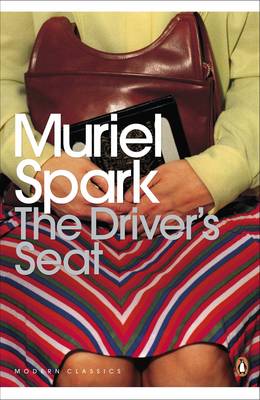
I felt quite unsettled after reading this novella - a character, Lise, travels abroad to choose the right person to kill her - which is disturbing in itself, but the voice of the narrator also finds its way to the inner ear, storytelling that takes the reader hostage, and makes them somehow complicit, as if they were a character in the novel and controlled by the author, just as Lise controls and puts other characters at risk in her quest for a gruesome self-annihilation. Spark hypnotises the reader in this way by laying the motive bare, going to the heart of the matter, to the jugular; the uncompromising truths, as dark as they are, are inevitable and unstoppable; the spareness, starkness, of the chrome-like, plot-driven, prose doesn't allow the reader to come up for air; the narrator attracts, seduces, enervates, renders the reader passive as if they were suffering from some form of locked-in syndrome, a horrible entrapment where they have no choice but to witness the story inevitably unfold.

It's a counter-cultural book, antithetical to the swinging sixties (Lise's deliberately gauche clashing attire is the opposite of the Mary Quant look); a satire on the commercialism of human life, the portmanteau scenes in the municipal department store a kind of dystopia-in-the-making, the future in all its banality about to explode. This is less a novella and more a dark film. It shows us the pitfalls of insanity but not how to avoid it. The voiceover-like narration works as if to document our naive outlook. The book is a bleak and beautiful private relations disaster. It is also a feminist book.

9.10.18

The Poems of Vincent van Gogh


Anthony Costello 
I Freeze, Turn to Stone 
October 2018. 43 pp. ISBN-13 978-3-901993-69-5 
£7.00 (+ 1.50 p&p), €7.00 (+ 1.50 p&p), US$10.00 (+ 2.50 p&p) 

http://www.poetrysalzburg.com
  
“Anthony Costello here joins the company of Charles Reznikoff, John Seed and others, who have transformed documentary or personal prose into resonant free verse. Such a process doesn’t just slow the prose down, it elicits a different kind of attention. Reading it, we are less focused on the human story, and more on human perception, sense, and predicament, in themselves, which as a series of semi-detached moments reach further into Van Gogh’s being. Instances of common pain and hope are set in sequence with his obsessive observations, repeatedly making lists of coloured things wherever he was: houses, rooms, fields, clouds, cups and saucers … In the poised rhythmic measure that Anthony Costello provides, the simplicity of these lists by which he clings onto life, finally matches the simplicity of the heart-felt appeal for normality: that same night one single star a large friendly one, // and I 

http://www.poetrysalzburg.com/

thought of you all and my own past years // and our house, and in me, these words …”
Peter Riley

I Freeze, Turn to Stone is such an interesting and original project. I had no idea Van Gogh was such a poetic writer. These poems are vivid, joyous and melancholic; they chart an exquisite process of discovery and curation. I Freeze, Turn to Stone deepens our appreciation of the relationship between visual, written and lived experience.”
Helen Mort

“Anthony Costello has created from Van Gogh’s letters a collaboration across time: the painter finds a language for what he sees; the poet engages the reader in the painterly work of looking, and seeing. Costello’s poems are alive with a sensuous intensity of seeing: the blue of an enamelled coffee pot and of the Milky Way; how red floor tiles and the green of a garden shine alongside each other. The language is exact and transparent, as attentive to nuance and rhythm as a painting is to texture and pattern. The poems become a portrait of the artist and a reimagining of his art.”
Judith Willson

13.9.18


Frank O’ Hara & the Desecration of a Classic Poem

By Anthony Costello


Is there such a thing as a finished poem? In the digital age, is the erstwhile finished poem up for grabs? Until about 30 years ago and the emergence of the internet, a published book was, with some exceptions, indelibly fixed in print, bound in covers where it sat unchanged (and unchallenged) for centuries. But now many books are free to read online from sources such as The Gutenberg Press, The British Library, The American Poetry Foundation. The once hallowed words of classic texts can be easily cut and pasted, adulterated, referenced casually by anyone, used for so-called ‘found’ literature. These poems, once they reach a google doc system, can be re-worked, re-envisioned, edited. Text is not sacred anymore.

Writers, especially poets, have a habit of making changes to long-established work. Self-revision. When poets are selecting poems for a Selected or a Collected they edit, sometimes quite dramatically, sometimes for the good and sometimes for the bad, poems that had not only been deemed finished, but poems that had a fixed readership. Should a poet have the right to do this once a work has been published? They do, often against the advice of an editor and publisher, sometimes risking the chagrin of once satisfied readers. Elizabeth Bishop and Derek Mahon, Robert Graves and Rita Dove are just a few of the many poets who have made (and make) changes to their earlier work. Poetry is, seen in this light, a work in progress, something that can be continually revised. One thinks of W.B. Yeats’ late revisions of his earlier work, Robert Lowell’s radical re-working of the poems published in Notebook 1967-68, or Walt Whitman’s Leaves of Grass published in 1855 but constantly added to and self-revised right up to his death.

If, as Helen Vendler suggests, changing one word in the edit of a poem is a ‘complex act’ then we can understand the ramifications of wider revision. Writers edit their own work and editors edit writers’ work (again sometimes for the good or bad). Often there is a tacit agreement between writer and editor about the ‘finished’ work to be published, but what of the injudicious heavy-handed editor that does not serve the writer (or literature) well. Gordon Lish dramatically reduced Raymond Carver’s early stories to a point that could be called minimalist. There are many writers and critics who prefer the Lish-free Carver, the original ‘longer’ short prose. And what of John Taylor, the publisher of John Clare, who edits (erases) the essential natural dialect and rustic phonetic spelling of the Helpstone poet to suit a London-centric cosmopolitan readership. At least these writers were alive when changes were made to their work, they had a chance to protest. And then there is Shakespeare, seven years deceased when the First Folio of his plays were published in 1623. A Folio published from the extant quartos to achieve what scholar-editors thought was the definitive edition of his work. A precedent set.

Art and Literature is protected by copyright laws, but these are often flouted and when the copyright expires art and literature is up for grabs. In a dystopian horror worthy of H.G. Wells or J.G. Ballard, there could be a future where classic texts are re-written by readers. Teachers of literature often encourage students to copy out passages of great writing so they experience at first hand the physical embodiment of the writer’s craft, perhaps an identification with the thought process of the writer. In the virtual world the reader becomes a powerful critic, making changes to the poems they read, at will, taking away, revising. In the digital age everyone is potentially an editor.. If everyone is an editor, then everyone is a critic, everyone has judgement, taste. In the hypertextual world text is mobile, language is for everyone, an egalitarian ownership of the written word. It was in this dystopian spirit that I edited Frank O’Hara’s ‘The Day Lady Died’, a [sacrilegious] re-working of a dead poet’s work, the desecration of a classic poem.

I love O’Hara’s filmic poem, the pitch-perfect narrative (a voiceover), its roll-call of directions and images, it’s immediacy, its day-freshness, the movement of mind and body in real historical time, the casual references to art and artists and his personal friends, the restraint, the honesty, the emotional choke at the end of the last line, which leads us back to the title. However, on re-reading the poem again after twenty years I became fascinated by the indented line that starts the third stanza. Why this staggered enjambement? How fat this third stanza is compared with the others. The preceding and following stanzas are alternate six and four line stanzas and that is no accident. Despite the despotic looseness of the language, the structure is tight, regular, except for the third stanza?

I split the nine line third stanza into two quatrains with a natural break after ‘Verlaine’ at the end of each stanza and deleted the line

‘after practically going to sleep with quandariness’

before the next sestet; now, there were six stanzas instead of the original five, 28 lines instead of 29, and one deleted line. These are the changes I had in mind. Anything gained? What is lost in this experiment? I egotistically thought there might be a small gain and nothing lost. But I was wrong. I feel the edited poem is just adequate as a mixture of sestets and quatrains, but the indented line ‘I go on to the bank’ looks lost in a quatrain, the three lines underneath not weighty enough to sustain it. The structure of the edited version is solid enough, but the shape isn’t. In the deleted line the word that was reminding me of its pivotal importance was ‘quandariness’ which has something of Louis MacNiece’s ‘variousness’ and sums up the dizzying world of O’Hara’s New York in one day, until he his stopped in his tracks by a picture on the cover of the New York Post.

I also noticed the numeral balance to O’Hara’s original poem compared to the edited version. The original is on the left below:

6  6


4  4


9  4


6  4


4  6


4

I came to realise the nine line stanza is the heart and body of the poem, perfectly placed, 9 lines of 29, two equal-lined stanzas either side of it, a centrifugal weight for the thoughts and movement and feelings spinning off it. In trying to change the third stanza I saw it was the most important, central to the build up, central to the pay off. The indented line serves as a pre-echo of the dramatic pause at the end of the poem /…’and I stopped breathing’. The poem is also an historical document as well as priceless poetry. To edit this poem would be to alter history. In this sense, the poem is unrevisable. We can’t go back to the future with it. This sacred text is protected by its own creative mechanism. Frank O’ Hara, had he lived to an old age, wouldn’t have wanted to change it?


8.1.18

Artists and their Physicians


Here is a link to a recently published collaborative essay on the relationship between Vincent Van Gogh and Dr. Paul Gachet

Hope you enjoy,

Anthony


http://fortnightlyreview.co.uk/2018/01/van-gogh-gachet/

21.11.17

The Heart is a Lonely Hunter


A few weeks ago I re-read a novel - The Heart is a Lonely Hunter - that I had plucked from the bookshelves of a friend's flat I was staying in during a few days in Munich. I began reading it in Bavaria and finished reading it in England having inadvertently taken the book back with me in my backpack. It was a long, tight read. I read it slowly because it's a book rich in minute details and overlapping small-town story-lines that made me think of William Faulkner and especially Faulkner's book Sanctuary.

It's a book hard to summarise easily. When I was reading it, I wrote notes and had plans for an essay (I did make some notes on white cards) but now, several weeks later, I can't think of any overall standout theme. The author, Carson McCullers, is like a documentary-maker getting to the heart and soul of a small, southern town in the US. Her camera goes in close, uncomfortably close, to a populace of misfits and the damned.

The examination of the characters' lives is unremitting. The taut prose gleams boldly and is heroically unforgiving of its subjects, precise and cutting like a surgeon's knife; the narrative is film-like, the scenes like minimalist paintings, the honesty of the emotions pared back to a raw richness, until the burst of defiant expression. The characters are so hard on themselves. The heart is a ruthless hunter, maybe.

And yet, out of the bleakness, there is a progressive reach, truth is somehow nearby, and the lowest of the low are ennobled by their immense struggle. I can think of no other novel that, chapter by chapter, could be a contender for a cut and paste treatment. You can read these chapters any which way and still feel the pull of the book's power.

I have to post this yellowing spine-broken book back to Munich. It is an easy book to let go of, a hard novel to surface from.

On one of my white cards I wrote:

Benedict Mady Copeland (Dr Copeland)
is a precursor to:

Malcolm X
Martin Luther King
Rev. Jesse Jackson

26.8.17

Ex Nihilo

EX NIHILO


There is no such thing as nothing.
I prefer creatio ex materia to explain
the mercy of peace and wonderment
that punctuate our damned lives.


Those poor Judes, their artisan talents,
the pitfalls of class, the fostering of hope
Nietzsche felt the worst myth in the box.


I read Shelley in spring and need no-one.
In the wildlife garden I make wood piles
and know tonight the dung beetles
will navigate by the moon and stars


to clamber aboard the turd I've left them.
Sunbeams dancing on the stream by day,
dung beetles rolling around in shit at night.

AC

* Those poor Judes (the Obscures)

21.5.17

Summer Poetry

Dear Readers,

Welcome to the Summer issue of The High Window. We are delighted by the growing international interest in our online journal and printing press. This issue sees work from across the age spectrum, from Sophie Reissbort, aged 15, to Maurice Rutherford who is 95, with a range of ages in between!

In previous issues detectable themes have appeared in the submissions accepted, but the poems in issue 6 are incredibly diverse. What strikes us is the language that crackles at sometimes subtle and sometimes loud decibels, and that the poems are profoundly confident in themselves, as if the poets had chiselled their thoughts to the point of no return: this is what I have to say. As Peter Daniel's writes in Down and Up

On the upper side of the cloud cover, God sits deciding
what’s on the cards, sharpening the moon like a sickle.

In this issue we have six book reviews of work by Peter Sirr, Gerard Smyth, Adam Wyeth, Michael Crowley, Ruth Sharman and the recently deceased Roy Fisher.

The essay is a homage (if not elegy) for the recently deceased Sam Gardiner, and the featured American poet is the wonderfully talented Richard Hoffman. Get to know him more 'in conversation with'...

Our resident artist, Angela Smyth, has illustrated the poems of Anne Irwin, Sue Burge and Daniel Marshall. previous poets who have had their work illustrated  have been interested in buying the original art work from Angela. This service she is happy to provide.

The translation feature focusses on Dutch poetry: seven poets' work are featuring here and four translators. This feature was guest edited by David Colmar and with help from the Dutch Foundation for Literature. We are deeply grateful for their interest in The High Window as a platform for poems in Dutch/English.

The High Window summer publication is The Edge of Seeing by John Duffy. We are proud of this book and have immense faith in this poet. John's book can be bought here or via the Press page.

Finally, a heartfelt thanks to our reviewers, essayist, American poet, David Colmar, Angela Smyth and to the fabulous  poets who submit their work free gratis. We would not have The High Window without you.

See the whole issue at:thehighwindowpress.com

Happy Summer